.svg)
Scar Revision
Charlotte's Most Trusted Plastic Surgeon
— delivering confidence through precision and care.
.png)
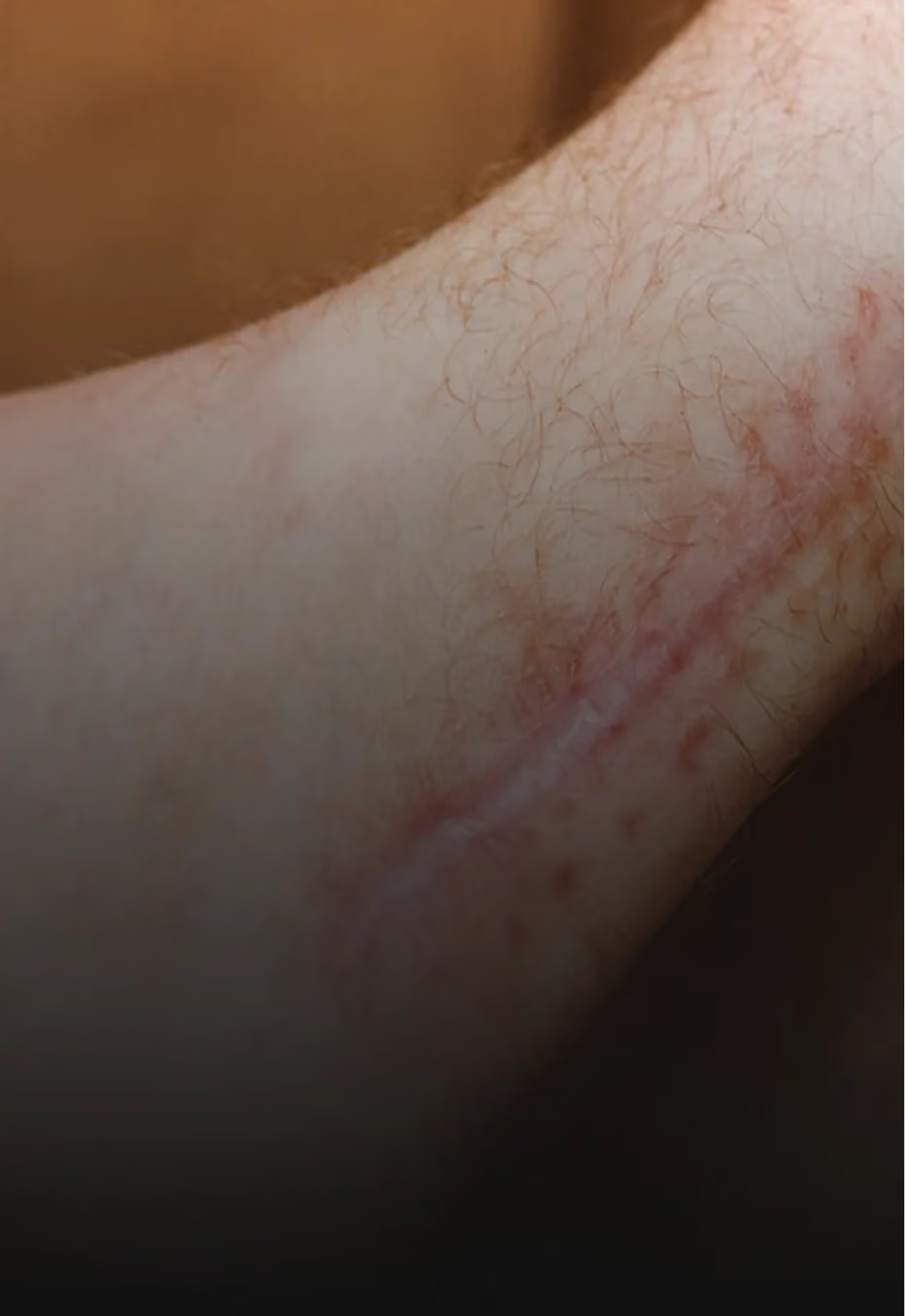
Precision Meets Restoration
Your body is remarkably good at healing itself, and scars are proof of that. But sometimes the way a scar heals can leave it raised or discolored. At May Plastic Surgery, Dr. Brian May offers everything from noninvasive scar treatments to surgical revision to help scars be less noticeable. He will guide you to the right treatment based on how long you have had your scar and how your body typically heals from wounds.
Local
1-2 hours
1-3 weeks
What Is Scar Revision?
Scar revision can be surgical or nonsurgical, depending on your needs and goals. While each case is highly individualized, nonsurgical approaches are often preferred as a first-line treatment to soften, flatten and fade scars as much as possible.
If surgical revision is still desired after more conservative approaches, Dr. May can remove an existing scar and reclose the area to help the tissue heal more smoothly the second time. As a plastic surgeon, he knows a lot about how to avoid tension on the surrounding skin and where to position incisions to improve the appearance of the scar. While he cannot completely eliminate the scar, he can improve the way that it looks and feels.

- Dr. Brian May


What Can Scar Revision Address?
Scar revision can help improve scars that have healed poorly. Dr. May commonly treats scars resulting from:
- Previous surgeries
- Traumatic injuries or lacerations
- Burns
- Severe acne
- Poorly healed wounds
- Keloid or hypertrophic scarring (thick, raised scars that grow beyond the original wound)
Each scar benefits from a different strategy, and Dr. May often recommends less invasive methods first, like microneedling, silicone sheets, laser therapy or steroid injections before moving ahead with surgery.
The Art & Science of Scar Revision With Dr. May
Dr. May's approach to scar revision is deliberate by design. Rather than moving straight to surgery, he prefers to let a scar mature fully first, and use less invasive approaches to gradually improve texture, color and profile before considering surgery. And when surgery is still the right move, that groundwork has already improved the surrounding tissue, making it possible to excise less and close incisions with minimal tension, two factors that have an outsized impact on the final result.
It's a process that requires patience, but Dr. May believes patience is exactly what good scar management demands. He monitors healing closely throughout and reintroduces nonsurgical tools as needed, even after revision. For him, the goal isn't just a better scar. It's the best possible outcome, whatever that takes.
- Dr. Brian May
Procedure Details
Nonsurgical scar revision may include options like silicone therapy, which involves applying flexible silicone sheets to your scar at home, while other options, such as microneedling, laser treatments or steroid injections, are performed in-office and may involve multiple sessions to achieve your desired results.
Surgical scar revision is typically performed using local anesthesia, although larger or more extensive revisions may call for other types of anesthesia. During the surgery, Dr. May carefully excises the existing scar tissue and removes the old wound edges to create a clean starting point for the new closure. Then he closes the incision in a way that reduces tension on the surface of the skin. After the surgery, Dr. May often supplements the procedure with noninvasive treatments to encourage healing.
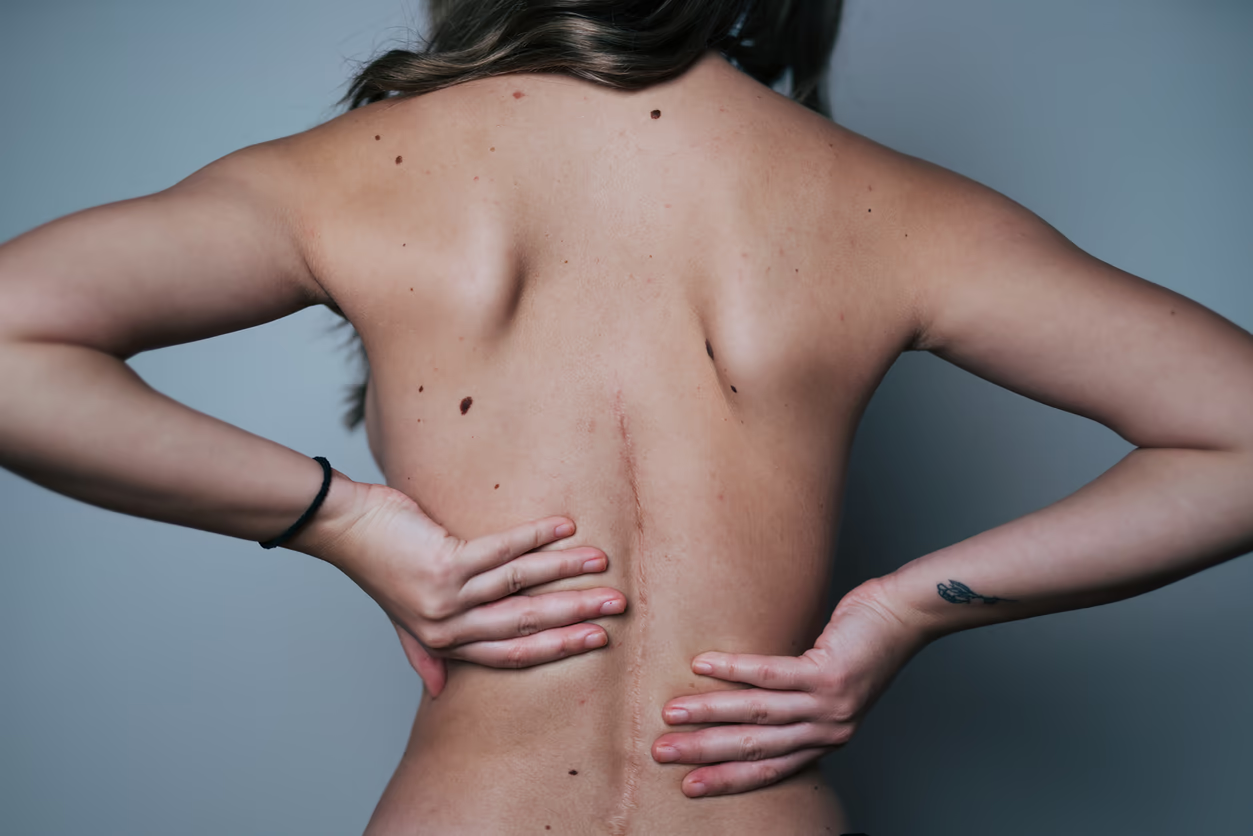
Recovery & Results
Recovery from scar revision is similar to what you might expect from other minor surgical procedures. There will be some swelling and bruising, plus some mild discomfort at the site. Usually, this can all be managed with a little ice and pain medication. Before you leave the office, Dr. May will give you all of the information you need to take care of your new incision well so that it heals effectively.
Scars take time to fully mature. During the first few weeks, the incision line will be bright in color and slightly raised, which is a normal part of the healing process. With the right care, the scar will flatten and fade, and the skin will become softer. Within six to twelve months, the appearance of the scar will be much less noticeable.
Inside the Consultation Room With
Dr. Brian May
Adjunct Procedures:
To take your
Scar Revision
results to the next level, consider these options for a more complete transformation:
Request Your Consultation

If you have a scar that bothers you, whether it's from a previous surgery, an injury or a wound that didn't heal the way you'd hoped, Dr. May can help you explore your options. He'll take the time to evaluate your scar and recommend a plan. Call us at 704-200-2493 to schedule your scar revision consultation at May Plastic Surgery.
Let's Connect
We are here to help. Whether you’re exploring your options or ready to schedule, our team is here to answer your questions about procedures, recovery, and next steps — and to personally guide you every step of the way.